


ThredUP: Online Thrift Store
3.830.54K Reviews
App Specs
- Version
- 7.35.0
- Updated On
- License
- Free
- Downloads
- 5,000,000+
- Developer
- thredUP, Inc
- Categories
- Shopping
- Platform
- Android, iOS
Screenshots
 Analysis by AppCompare
I approached ThredUP: Online Thrift Store as I would any shopping app I might recommend to a friend: not just by asking whether it has plenty of clothes, but by considering how much effort it removes from secondhand shopping and where that convenience comes with trade-offs. It is a free shopping app from thredUP, Inc focused on women’s and children’s clothing, so its appeal is very different from that of a general marketplace or a traditional fashion retailer.
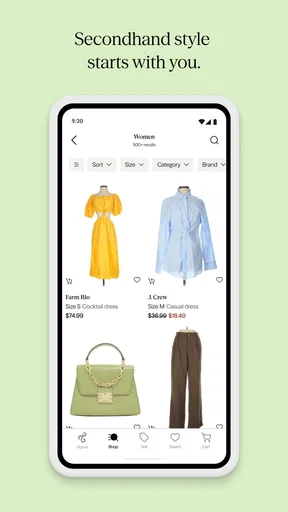
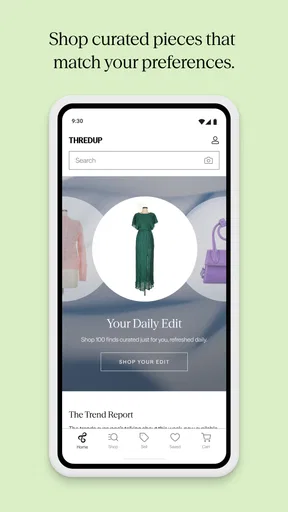
My first impression is that it makes browsing pre-owned clothing feel closer to ordinary online shopping than to searching through a crowded local thrift store. I can look through a large range of garments from my phone, narrow the search, compare individual listings, and build a cart without traveling between shops. That sounds simple, but it changes the whole experience for anyone who likes secondhand prices and variety but dislikes rummaging.
The app has been available since July 20, 2012, and its current version is 7.35.0. It is rated for Everyone and works from Android 7.1 onward. Those details matter mainly because this is a mature, accessible shopping tool rather than a new experiment. Its average rating is 3.8 from around 69 thousand ratings, while the app has passed 5 million installs. I read that as a sign of broad interest, alongside a reminder that the experience will not be perfect for every shopper.
How I Decide Whether It Is Worth Using
I judge whether a shopping app deserves a lasting place on my phone by looking beyond the first browse: does it help me make better decisions repeatedly, or does it only feel convenient at first? For ThredUP, I focus on whether a clear shopping brief and a careful review of listings keep the experience useful over time. That makes the next question less about novelty and more about the habits that sustain its value.
The right question is not simply whether the clothes are cheap
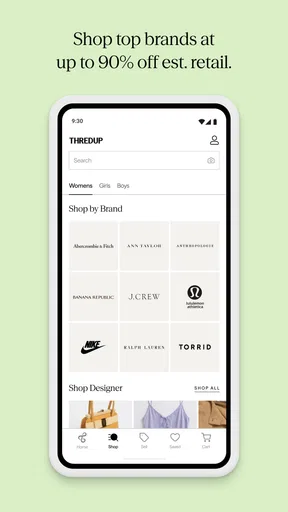
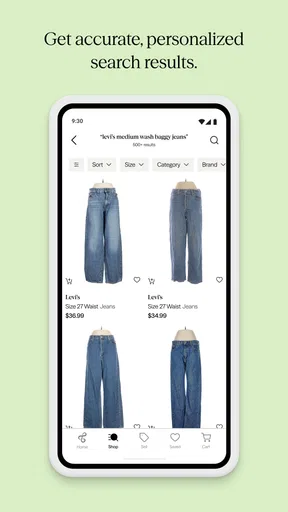
When I compare secondhand shopping options, I look at four things first: how quickly I can find a suitable item, how clearly I can judge its condition, how predictable the checkout experience feels, and how much work remains after the purchase. ThredUP performs especially well on the first point because a digital catalog is easier to search than a physical rack. If I already know the size, clothing type, color family, or brand I want, I can start with a much narrower search instead of scanning everything.
The second question is whether I am shopping for a specific need or browsing for inspiration. The app is more useful when I have a practical target, such as children’s clothes for a growing child, a replacement pair of jeans, or several pieces for a seasonal wardrobe refresh. It is less decisive when I want to touch fabrics, compare fits in person, or leave with an outfit immediately.
I also consider how comfortable I am with uncertainty. A new retail garment usually has consistent sizing within its product line, while a pre-owned item may show normal variation from brand to brand, wear to wear, and fabric to fabric. ThredUP can make discovery easier, but it cannot remove the basic challenge of buying clothing without trying it on. I would use measurements, photos, descriptions, and the item’s condition information together rather than trusting a familiar size label on its own.
Worth Reading Before You Choose

EA SPORTS FC Mobile 26 Is a Bigger Football Game, but It Takes Time

Flipboard Shows What News Apps Must Do Beyond the Feed

Switching to Android Auto Means Rethinking Your Driving Routine

Google Calendar Makes a Crowded Week Easier to Manage

Ludo King Makes the Most of the Minutes Between Plans

Baby Panda World Brings Quick Play to Modern Phones, but Its Game Library Feels Busy
Why the category focus matters
This is not a general marketplace where users list almost anything. Its focus on women’s and kids’ clothing gives the browsing experience a clearer purpose. For a parent, that can make the app more relevant than a broad resale platform filled with unrelated listings. For someone building a women’s wardrobe, the concentration of clothing can also reduce the distraction found in apps where apparel competes with furniture, electronics, collectibles, and local listings.
That focus is also a limitation. If I want men’s clothing, home goods, accessories outside the app’s strongest categories, or a local item I can collect today, I would need to look elsewhere. I would not install this expecting it to replace every secondhand marketplace. I see it as a specialist destination for people whose shopping needs match its clothing selection.
A realistic shopping situation
Imagine I need several school outfits for a child before the next season. In a physical thrift store, I might spend an afternoon checking racks, finding incomplete size runs, and hoping the right styles appear together. In the app, I can begin with children’s clothing, select a size range, and review multiple listings from home. I can save promising pieces, compare them later, and decide whether a group of items makes sense together.
The useful part is not only convenience. It is the ability to slow down the decision. I can check whether a shirt actually fills a gap in the child’s wardrobe instead of buying it simply because it is in front of me. The risk is that online browsing encourages a larger cart, especially when individual items look inexpensive. My practical rule is to make a short list before shopping and remove anything that does not solve a specific need.
What makes the buying workflow different
One strength I notice is that the app supports a more deliberate form of secondhand shopping. Rather than relying on luck at one store, I can search across a broad digital inventory and return to items when I am ready. That is valuable for people who need a particular size or style and do not want to wait for a convenient weekend trip to a thrift shop.
A less obvious trade-off is that digital convenience moves some of the sorting work onto me. In a physical store, I can reject an item immediately by feeling the fabric, checking the seams, or holding it against another garment. In the app, I need to inspect the listing carefully and accept that photos and descriptions are an imperfect substitute for handling the item. My best workflow is to zoom into images, read every condition note, and compare measurements with clothing I already own.
I also recommend treating the cart as a planning tool rather than a final commitment. I first collect possibilities, then review the group as a whole. This prevents a common secondhand-shopping mistake: buying several attractive individual pieces that do not work with anything already in the closet. The app is strongest when I use its variety to solve a wardrobe problem, not when I let variety create one.
Where it wins against physical thrift stores
Compared with a local thrift shop, ThredUP wins on searchability and reach. I do not have to depend on the inventory of one nearby location or spend time traveling between stores. That matters particularly for parents, people without easy transportation, and shoppers who need a specific size rather than a general category.
It also makes comparison easier. In a store, I may remember that I saw a similar item on another rack, but I cannot easily place both garments side by side once I move on. Online, I can keep several candidates in view and think about condition, color, and usefulness before buying. That extra pause can lead to better decisions when I use it intentionally.
Another advantage is privacy and convenience. Some shoppers simply feel more comfortable browsing clothing at home, at their own pace, without navigating crowded racks or asking staff to help locate a size. The app suits that quieter style of shopping well.
Where a general resale marketplace may be better
A general resale marketplace can be the better choice when I want direct communication with an individual seller, local pickup, or a very specific item that is not common in a curated clothing catalog. Those services may also suit shoppers who enjoy negotiating or who want to sell their own items directly. ThredUP’s appeal is a more organized retail-style experience, not the flexibility of a person-to-person exchange.
The distinction matters for sellers as well as buyers. Someone who wants to control the listing, answer questions, set the tone of the sale, and arrange a local handoff may prefer a marketplace built around individual sellers. Someone who values a more hands-off route for clearing out women’s or children’s clothing may find ThredUP more appealing. I would choose based on whether I want control or convenience, because those goals rarely reach their maximum at the same time.
When a normal fashion retailer remains the better option
A conventional retailer is still the safer choice when I need a guaranteed new item, a uniform fit across several pieces, or a purchase for a time-sensitive event. New retail also makes it easier to buy multiples of the same style, which can be useful for school uniforms, work basics, or children’s clothing that needs to match.
ThredUP is more interesting when uniqueness, lower-cost secondhand shopping, and reducing clothing waste are part of the decision. It is not automatically better just because an item is pre-owned. I still compare the total value, including condition, fit uncertainty, and the effort of finding the right piece. If the difference between a pre-owned item and a new basic is small, the new option may be more sensible for someone who prioritizes predictability.
The cost of changing from another shopping habit
Switching from a physical thrift store to an app is easy in one sense: I can start browsing immediately without learning a complicated system. The larger adjustment is mental. I have to become comfortable with evaluating clothing through a screen and resisting the urge to treat every low-priced discovery as a bargain.
Switching from a general resale app involves a different cost. I may give up some control over seller interaction and local arrangements in exchange for a more focused clothing experience. Before moving my whole secondhand routine, I would test the app with one clearly defined purchase. That gives me a chance to judge how well the listings suit my expectations and whether the online process feels less tiring than my current option.
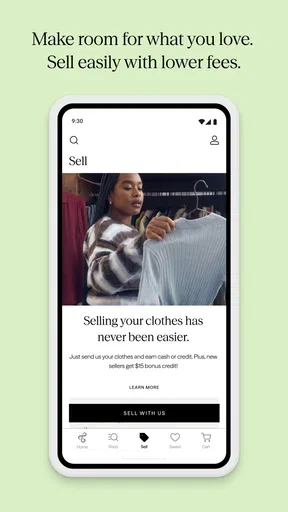
For someone who sells clothing, the decision deserves even more thought. A hands-off approach can save time compared with photographing, writing listings, messaging buyers, and coordinating individual sales. However, anyone who enjoys choosing the price and managing each transaction may feel that convenience is not worth surrendering control. The best fit depends on whether the goal is maximum involvement or a simpler way to move clothing along.
Practical habits that improve the experience
I would begin with a precise shopping brief: the person who will wear the item, the needed size, the type of garment, and the colors that already work with the wardrobe. This sounds basic, but it turns a large catalog into a useful search space. Without a brief, browsing can become an endless stream of tempting but unnecessary choices.
My second habit is to compare measurements with a garment I already own. A familiar size label is only a starting point, especially across different brands and materials. Laying a well-fitting piece flat and checking its key dimensions gives me a more realistic reference than guessing from the label alone.
Third, I group purchases by purpose rather than by excitement. For children, I might choose durable everyday pieces first and add one special item only if it fills a genuine gap. For my own wardrobe, I ask whether the garment works with at least two outfits I already wear. This is a small discipline, but it reduces the chance that a low-cost purchase becomes clutter.
Finally, I review the order before completing it with the same care I would use in a physical shop. I check sizes, condition notes, colors, and the overall mix. Secondhand shopping rewards patience; the best result is usually not the largest order, but the one in which most pieces have a clear role.
Who should try it first
I would recommend ThredUP to shoppers who enjoy finding pre-owned women’s or children’s clothing but want a more searchable alternative to visiting several thrift stores. It is especially suitable for parents, budget-conscious wardrobe builders, and people who prefer browsing privately from home. It can also be useful for anyone who wants more variety than a single local shop normally provides.
I would be more cautious about recommending it to someone who needs clothing today, dislikes judging fit online, or wants to inspect fabric and construction before paying. It is also not the obvious choice for shoppers outside its main clothing focus. In those cases, a local store, a general resale marketplace, or a conventional retailer may solve the problem with less compromise.
My recommendation
My overall view is positive, with a clear condition: use ThredUP as a focused secondhand clothing tool, not as a universal replacement for every way of shopping. Its strongest benefit is the combination of clothing-specific browsing and the convenience of searching from home. The app makes it easier to look for women’s and kids’ garments with a plan, especially when local thrift-store inventory is too unpredictable.
I would install it for a targeted wardrobe task, begin with a small order, and judge the experience by fit, condition, and usefulness rather than by the number of items I can find. That approach keeps the advantages of online thrift shopping while limiting the most common frustrations.
Since it is free and carries an Everyone rating, there is little barrier to trying the browsing experience. The real decision is whether I value digital selection more than physical inspection and whether I am willing to spend a little extra time checking each listing. If the answer is yes, this is a practical choice for organized secondhand clothing shopping. If I need immediate certainty, local pickup, direct negotiation, or categories beyond women’s and children’s apparel, I would choose a different route.
Pros
- Large selection of secondhand clothing
- shoes
- bags
- and accessories.
- Useful filters make browsing by size
- brand
- color
- and price easier.
- Regular discounts and promotions can make branded items affordable.
- Buying pre-owned items supports a more sustainable shopping habit.
- Detailed item photos help assess condition before placing an order.
Cons
- Inventory changes quickly
- so popular sizes and items may sell fast.
- Some items show noticeable wear despite being listed in good condition.
- Shipping and return costs can reduce the savings on inexpensive purchases.
- Sizing and fit may vary significantly between brands and individual garments.
- Returns can be less convenient than shopping with standard retail stores.
FAQs for ThredUP: Online Thrift Store
What is ThredUP: Online Thrift Store?
ThredUP is an online secondhand marketplace where you can browse and purchase pre-owned clothing, shoes, accessories, and selected items for children. The app is designed like a digital thrift store, with filters for size, brand, category, condition, and price. It is useful for shoppers who want more affordable or sustainable fashion without visiting physical thrift shops.
How does shopping on the ThredUP app work?
After creating an account, you can search or browse products, open individual listings, review photos and descriptions, select available options, and add items to your cart. Because inventory is made up of unique secondhand pieces, most products have limited availability and may sell quickly. Before ordering, carefully check measurements, condition notes, seller information when applicable, shipping details, and the return policy.
Are ThredUP items authentic and accurately described?
ThredUP processes and inspects items before listing them, and product pages generally include photographs, brand details, condition information, and descriptions. However, secondhand inventory can show normal signs of previous use, and minor imperfections may occasionally be difficult to notice in photos. Review every listing carefully, especially for luxury brands, unusual sizing, wear, stains, missing accessories, or altered garments.
Can I return items purchased through ThredUP?
ThredUP generally provides return options for eligible purchases, but the exact rules can depend on the item, order type, return reason, and current policy. Some products may be final sale or have special restrictions, while refunds may exclude certain shipping or processing costs. Check the return deadline and instructions in the app before buying, and keep tags attached if a return requires them.
Is ThredUP safe to use, and what should I know before downloading it?
ThredUP is a well-known resale platform, but shoppers should still use normal online-shopping precautions. Download the official app from Google Play or the Apple App Store, review requested permissions, and use secure payment methods. Read shipping, return, and promotional terms before completing checkout. Since stock changes constantly, saved items, cart contents, prices, and availability may change while you are browsing.


